Billionaire investor Vinod Khosla stated at the ongoing India AI Impact Summit 2026 (February 16 – 20) in New Delhi, that IT services and BPO roles will vanish within five years, with AI tools taking over tasks currently handled by human workers. He also argued that by 2030, traditional IT services and outsourcing will effectively disappear, replaced by AI-native services.
He also said that by 2050, most expertise-based professions—including medicine—could be disrupted, with AI taking over roles in areas such as accounting, oncology, therapy, chip design, architecture, and sales.
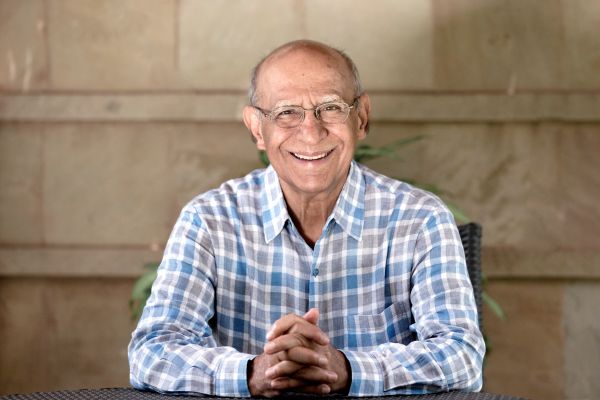
In response to Khosla, Ashok Soota, founder and Chairman, Happiest Minds Technologies, said that he is a strong believer in AI’s role as a powerful tech enabler rather than a human replacement.
“The notion that IT services will disappear in five years ignores the lessons of history on how technology has always evolved to create newer opportunities. At both my companies –Happiest Minds and Happiest Health, we see AI as a catalyst for accelerating growth, enhancing productivity, and driving innovation across enterprises. IT services will remain essential in customizing solutions for diverse industries and ensuring enterprises innovate faster and achieve superior business outcomes,” he said.
Soota said that AI is transforming IT services into higher-value offerings, empowering people to deliver smarter, faster, and more cost-effective solutions. “The industry is not dying; it is growing as the essential partner for enterprises and startups navigating the disruptive AI age. Even in my not-for-profit medical research trust, SKAN, I see AI enlarging the scope of research we can do, thereby increasing the market for IT services.”
Moreover, predictions that doctors will lose their jobs in the coming decades underestimate the human aspect of healthcare, Soota said. “AI is being used as a powerful tool that empowers doctors by freeing them from routine tasks, not replacing them. From diagnostics to treatment planning, AI is processing vast amounts of medical data, identifying correlating patterns, and providing actionable insights.”
Soota cited reports from the WHO and WEF that has highlighted that while AI improves diagnostics, planning, and efficiency, it requires strong human oversight. Also, KPMG’s 2025 GenAI Healthcare Sector Value Report shows that 65% of organizations are already reporting ROI from AI, with 92% of organizations believing that embracing AI will give them a competitive edge over those who do not. The entire Indian IT industry and many enterprises have completely embraced AI.
“Doctors and experts are emphasizing AI’s complementary role in medicine and not replacing human judgement and skill. Truly, the complex decision-making, trust, and personalized care that doctors bring to patients cannot be replicated by machines. The future of healthcare lies in a symbiotic partnership between human expertise and AI innovation, leading to better outcomes, improved efficiencies, and healthier communities,” Soota said.
Vinod Khosla’s remarks risk undermining the credibility and confidence of India’s flourishing IT industry, which continues to play a vital role in global business transformation, Soota added. “It is essential to highlight how AI is augmenting our capabilities, creating new opportunities, expanding our markets and strengthening India’s position as a global technology leader. Far from dying, IT services are becoming the trusted bridge between cutting-edge AI and real-world enterprise needs.”